





Info & Advice

How to Fix a Fence Post using a Concrete Fence Repair Spur
Need to stabilise a wobbly fence quickly and effectively? Rather than replacing the entire fence post, it may be possible to use a concrete repair spur to stabilise your post, and prevent further damage to the fence panels.
What you will need:
two people spade/pick axe concrete repair spur coach screws spirit level spare wood preservative or end-grain treatment post mix concrete or post fixing foam
1. Getting started
A concrete repair spur means that rather
…
21st Feb 2022

Top Ten Quick Garden Makeover Projects
For those of us lucky enough to have some outdoor space at home, we've all come to appreciate our gardens and outdoor living even more over the past two years. It's estimated that our spending on gardens rose to a staggering £16bn between 2020 and 2021 and the trend for investing in our garden space shows no sign of stopping.
But you don't need to have Alan Titchmarsh and a massive budget to improve your outdoor space. Whether you have a vast manicured terrace, compact urban garden or
…
23rd Aug 2021

Lawn Edging Like a Pro With Steel Edging and Tree Rings
Whether you have a small urban garden or a sweeping country estate, keeping the edges of your lawn in tip top condition can be a time consuming task. By adding lawn edging to your garden you can keep the edges of your grass defined, maintain crisp edges to flowerbeds or pathways, and protect planting areas within a lawn from damage.
What is lawn edging?
Lawn edging is essentially a hard edging material that is used to create a defined boundary between a grassed area and a flowerbed or p
…
14th Jul 2021
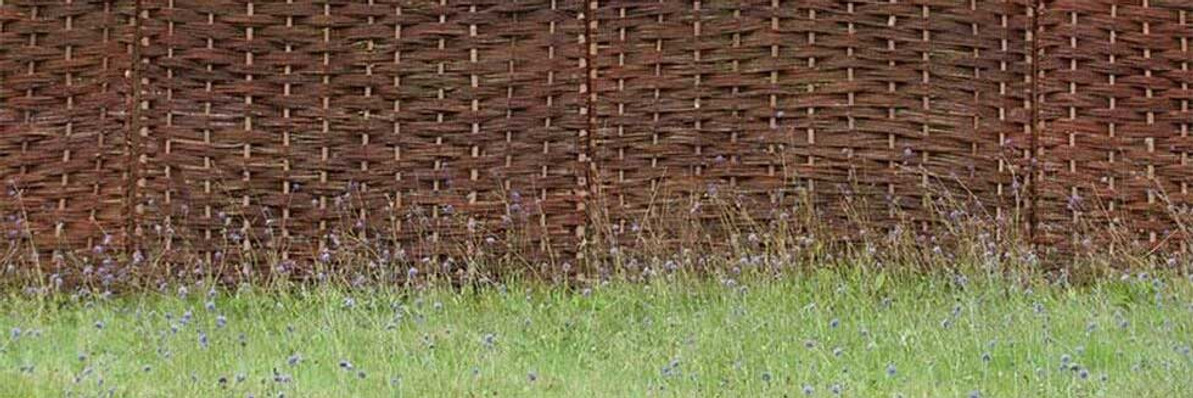
What are Willow Hurdles and Hazel Hurdles?
Willow and hazel fencing hurdles are a centuries old method of fencing, still used in both traditional and modern garden landscapes to introduce a natural, rustic backdrop. Handwoven from coppiced willow or hazel, these sustainable and versatile panels have a multitude of applications in the garden.
What are willow or hazel hurdles?
Willow or hazel hurdle fencing has been in use for hundreds of years, originally as a moveable fence to contain livestock in open farmland. The panel
…
8th Jul 2021
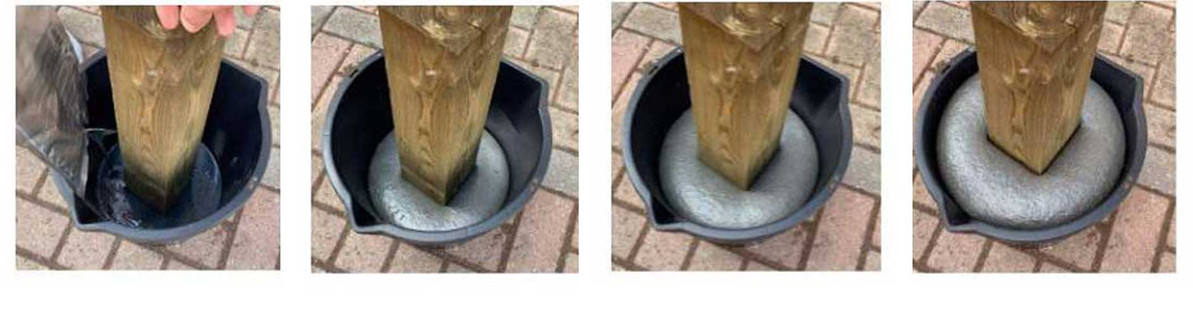
What is Fence Post Foam?
Post foams, such as Postsaver Pro-Set Rigid Post Fixing Foam are a relatively new product that can be used as an alternative to Post Mix Concrete to set fence posts. When the two chemicals in the bag are mixed they produce a rapidly expanding foam which is fast setting, giving the same lateral strength as Post Mix Concrete. With one bag of fence post foam equivalent to two bags of Post Mix Concrete, could this become the new way to fix fence posts?
Does fence post foam work?
…
5th Jul 2021

Pressure Treated Timber vs. Dip Treated Timber
There are two main methods of applying preservative that are commonly used with fence panels and timber fence componentry – dip treated and pressure treated. Both of these applications are effective against water damage, insects and fungal decay but which should you choose for your project?
When choosing timber for a fencing project you may be confused by the variety of terms and types of treatment - you may have already read our articles on the
…
1st Jul 2021

What is ACO Drainage or Channel Drainage?
ACO Drainage, Channel Drainage or Linear Drainage is a method of draining surface water from hard surfaces such as tarmac or paving, using a long narrow drain covered by a grating which drains water along its entire length. You will have seen these long galvanised steel gratings in public areas such as car parks or shopping precincts, however channel drainage is also used for domestic applications such as drainage from driveways and patios.Why do I need an ACO drain?
The SUDS legislati
…
28th Jun 2021

What Are The Parts Of A Wooden Fence Called?
If you're about to put up a wood fence for the first time it's easy to become confused by the technical phrases used. Our handy glossary of the individual pieces that make up a fence will help you to identify fence parts and choose the fencing components you'll need to finish your project.
ACOUSTIC PANELS are fence panels that are designed to reduce outside noise.
ARRIS RAILS are a wooden beam with a triangular cross-section, used in the construction of feather edge or clos
…
25th Jun 2021

How To Lay a Gravel Driveway or Path
Gravel drives and paths continue to be a popular choice, especially for larger areas where the cost is considerably cheaper when compared to a paved or hard surfaced driveway. The installation of a gravel driveway is relatively straightforward, and well within the ability of a home DIYer if you have the time.What are the advantages of a gravel driveway?
In addition to lower material and installation costs than a paved driveway, a
gravel driveway has several other benefits:
no need
…
22nd Jun 2021

Using Gravel, Slate and Decorative Aggregates in the Garden
Whether you're a keen gardener or a landscape architect, gravel, garden slate and decorative aggregates have been a longstanding favourite for garden design, and have seen a resurgence in recent years in modern landscaping schemes. The use of gravel in the garden has come a long way since the rockeries or alpine gardens of the 1970s, with a wide range of decorative aggregates and stone products now available to use in your garden landscaping.From traditional gardens to minimalist Japanese pla
…
22nd Jun 2021

Using Top Soil, Potting Compost and Bark Chippings in the Garden
Top soil, compost and bark chippings are all essential materials for garden projects, from filling a garden planter to laying a new lawn or flowerbed. Here's our handy guide to selecting the right product for your project.What is top soil?
Top soil (or topsoil) as its name implies is the rich layer of soil normally found between 5 and 10 inches from the surface. It is a combination of mineral particles, organic matter, microorganisms, water and air.
Top soil can be mixed with the
…
14th Jun 2021

A Guide to Closeboard Fencing
Closeboard fencing remains a popular way to build a solid boundary fence that will stand the test of time. Sometimes referred to as close board fencing, ship lap or featherboard, closeboard wooden fencing is constructed from overlapping vertical timber boards which are nailed to horizontal rails running between fence posts.
You can buy pre-constructed Closeboard Fence Panels or Lap Fence Panels (where the boards run horizontally rather than vertically), but true closeboard fencing is
…
10th Jun 2021